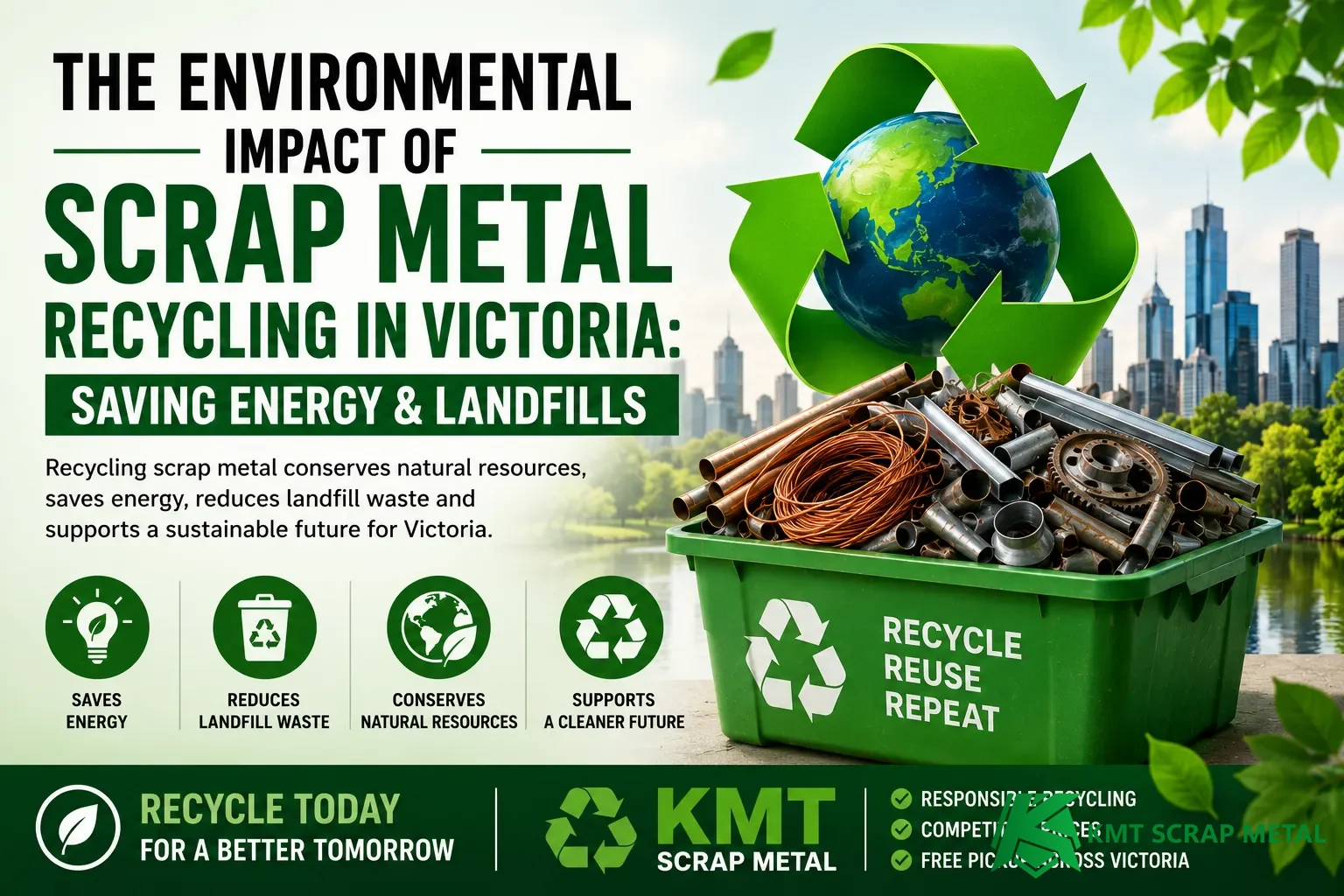
Discover the environmental impact of scrap metal recycling in Victoria, including how recycling saves energy, reduces landfill waste, conserves resources and supports a circular economy.
Scrap Metal Recycling in Victoria plays an important role in reducing waste, conserving natural resources and supporting a more sustainable circular economy. Metals such as steel, aluminium, copper, brass and stainless steel can be recovered and processed instead of being sent to landfill.
For households, construction companies, factories, manufacturers and businesses across Melbourne and Victoria, recycling unwanted metal is not only a practical way to manage scrap but also an important environmental responsibility.
Victoria is continuing to strengthen its waste and resource recovery system. The Victorian Government's current circular economy approach focuses on keeping valuable materials in use, increasing resource recovery and reducing the amount of waste sent to landfill. :contentReference[oaicite:0]{index=0}
Why Is Scrap Metal Recycling Important in Victoria?
Metal is a valuable resource that can often be recovered and reused instead of being discarded. When scrap metal is recycled, useful materials remain in the economy and can become feedstock for new products.
Victoria's waste hierarchy places recycling above landfill disposal. The Environment Protection Authority Victoria recommends looking for opportunities to avoid, reuse or recycle waste before considering landfill as the final option. :contentReference[oaicite:1]{index=1}
This makes scrap metal recycling an important part of responsible waste management for both businesses and households.
How Scrap Metal Recycling Helps Reduce Landfill Waste
One of the biggest environmental benefits of Scrap Metal Recycling in Victoria is keeping valuable metal out of landfill.
When recyclable metal is mixed with general waste, it can become difficult or impossible to recover economically. Separating metal at the source gives recyclers a better opportunity to recover and process it.
Victoria's resource recovery planning specifically aims to increase the reprocessing and reuse of recovered materials while reducing reliance on landfill. :contentReference[oaicite:2]{index=2}
Less Valuable Material Going to Landfill
Recycling copper, aluminium, steel, brass and other metals means these materials can remain in the resource cycle instead of occupying landfill space.
Better Use of Existing Resources
Recycling allows materials that have already been manufactured to be recovered and used again, reducing the need to continually source new raw materials.
How Metal Recycling Saves Energy
Producing metals from recycled material can require considerably fewer inputs than producing metal from virgin resources. Victoria's resource recovery guidance notes that discarded materials contain the energy, water and raw materials used in their original manufacture, while recycling can require much less energy and other inputs than producing materials from virgin resources. :contentReference[oaicite:3]{index=3}
The exact energy savings depend on the metal, grade, contamination, processing method and recycling facility. However, recovering metal generally helps preserve the resources and energy already invested in producing the original material.
Aluminium Recycling and Energy Conservation
Aluminium is particularly suitable for recycling because it can be recovered and processed into new aluminium products. Common aluminium scrap includes window frames, extrusions, sheets, wheels, cans and manufacturing offcuts.
Recycling aluminium helps keep this valuable material in circulation and reduces dependence on newly extracted resources.
Businesses with aluminium scrap can learn more through our Best Aluminium Scrap Buyers in Melbourne guide.
Copper Recycling Helps Conserve Natural Resources
Copper is another highly valuable recyclable metal. It is commonly found in electrical wiring, plumbing pipes, cables, motors, transformers and industrial equipment.
Recovering copper from scrap provides an opportunity to return an existing resource to the manufacturing cycle rather than relying entirely on newly extracted copper.
Read more about Best Copper Recycling Services in Melbourne.
Steel Recycling and Resource Recovery
Steel is widely used in construction, manufacturing, machinery, vehicles and infrastructure. Construction and industrial projects can generate large quantities of steel offcuts, structural components, beams and other metal waste.
Recovering these materials can help reduce the amount of metal waste sent to landfill while providing a valuable feedstock for recycling.
For construction businesses, our guide to Construction Scrap Metal Removal Services in Melbourne explains how professional collection can help manage recyclable site materials.
Scrap Metal Recycling Supports a Circular Economy
A circular economy aims to keep products and materials in use for as long as possible. Instead of following a simple pattern of extracting resources, making products and disposing of them, recycling creates opportunities to recover materials and put them back into productive use.
Victoria's current waste and recycling strategy places strong emphasis on developing a circular economy and improving resource recovery infrastructure. The Victorian Government's 2026 investment prospectus describes the sector as undergoing a major transition toward a more circular economy. :contentReference[oaicite:4]{index=4}
Environmental Benefits of Scrap Metal Recycling
- Reduces landfill waste
- Conserves natural resources
- Helps save energy used in material production
- Keeps valuable metals in circulation
- Supports resource recovery
- Reduces the need for virgin raw materials
- Supports a circular economy
- Encourages responsible waste management
What Metals Can Be Recycled?
A wide range of ferrous and non-ferrous metals can be recovered through professional scrap metal recycling.
- Copper
- Aluminium
- Brass
- Stainless Steel
- Mild Steel
- Cast Iron
- Bronze
- Lead
- Electric Motors
- Metal Cables
- Radiators
- Industrial Machinery
- Metal Offcuts
See our Scrap Materials page to learn more about recyclable materials.
Scrap Metal Recycling for Melbourne Businesses
Factories, warehouses, construction companies, electricians, plumbers and manufacturers can generate significant amounts of recyclable metal.
Separating scrap at the workplace makes it easier to recover valuable materials and can help businesses maintain cleaner and more organised work areas.
Our Commercial Scrap Metal Collection in Melbourne guide provides more information about managing commercial metal waste.
Industrial Scrap Metal Recycling
Industrial facilities may generate steel, copper, aluminium, machinery, motors, cables and production offcuts. Regular collection and recycling can help businesses divert recyclable materials away from general waste streams.
Victoria's resource recovery sector is expanding its capacity to keep valuable materials in use, with the Victorian Government identifying metal recycling as an area where increased processing capacity will be important to meet future demand and keep materials out of landfill. :contentReference[oaicite:5]{index=5}
Businesses can also read our guide to Best Industrial Scrap Metal Recycling in Melbourne.
How to Make Scrap Metal Recycling More Environmentally Friendly
- Separate metal from general waste.
- Keep different metal types separated where practical.
- Remove unnecessary contamination.
- Store scrap safely before collection.
- Use professional recycling services.
- Recycle large commercial and industrial loads regularly.
- Choose reuse or recycling before landfill whenever practical.
Why Proper Scrap Sorting Matters
Sorting scrap metal correctly can make the recycling process more efficient. Copper, aluminium, brass, stainless steel and steel have different properties and may require different processing methods.
Keeping materials separated can also make it easier for recyclers to identify and assess different grades of scrap.
How Scrap Metal Recycling Works
- Collection: Scrap metal is collected from homes, businesses, factories or construction sites.
- Sorting: Different metals and grades are separated.
- Weighing: The material is weighed before processing.
- Processing: Scrap is prepared for recycling.
- Reprocessing: Recovered metals are processed for use as recycled material.
- Manufacturing: Recycled metal can become part of new products and materials.
Scrap Metal Recycling and Landfill Reduction in Victoria
Reducing landfill dependence is an important part of Victoria's waste strategy. The Environment Protection Authority Victoria states that landfill is the least preferred option in the waste management hierarchy and encourages businesses to investigate alternatives such as reuse and recycling. :contentReference[oaicite:6]{index=6}
The scale of the challenge is significant. Victoria's 2026 Circular Economy Market Report states that around $3 billion worth of materials were reused in 2023–24, while $1.2 billion worth of materials still went to landfill, demonstrating the opportunity for greater resource recovery. :contentReference[oaicite:7]{index=7}
How KMT Scrap Metal Supports Recycling in Melbourne
For Melbourne households and businesses with unwanted recyclable metal, professional collection can make responsible recycling more convenient.
KMT Scrap Metal provides scrap metal recycling and collection services for a range of residential, commercial and industrial requirements.
You can learn more about available options on the Scrap Metal Services page or arrange collection through KMT Scrap Metal.
Frequently Asked Questions
Why is scrap metal recycling important?
Scrap metal recycling helps recover valuable materials, reduce landfill waste, conserve natural resources and support a circular economy.
Does recycling metal save energy?
Recycling can require substantially fewer energy and material inputs than producing some metals from virgin resources. The exact savings depend on the metal and recycling process. Victorian resource recovery guidance recognises the lower energy and resource inputs associated with recycling compared with virgin production. :contentReference[oaicite:8]{index=8}
What metals can be recycled?
Common recyclable metals include copper, aluminium, brass, steel, stainless steel, cast iron, bronze and lead, along with many metal-containing products and components.
Can businesses recycle industrial scrap?
Yes. Factories, manufacturers, construction companies, warehouses and other businesses can arrange professional collection and recycling of suitable scrap metal.
Does scrap metal recycling help reduce landfill?
Yes. Recycling suitable metal keeps valuable materials in the resource recovery system rather than sending them directly to landfill. Victoria's waste hierarchy prioritises recycling over landfill disposal. :contentReference[oaicite:9]{index=9}
Conclusion
Scrap Metal Recycling in Victoria is an important part of reducing waste, conserving resources and building a more circular economy. Recycling copper, aluminium, steel, brass and other metals gives valuable materials another use while helping reduce dependence on landfill and virgin resources.
For Melbourne households, builders, manufacturers, factories and commercial businesses, responsible scrap metal recycling is a practical way to contribute to a cleaner and more resource-efficient Victoria.
Have unwanted scrap metal? Visit KMT Scrap Metal to learn about recycling and collection options across Melbourne.